Dry Coconut vs Fresh Coconut: Uses, Benefits and How to Choose
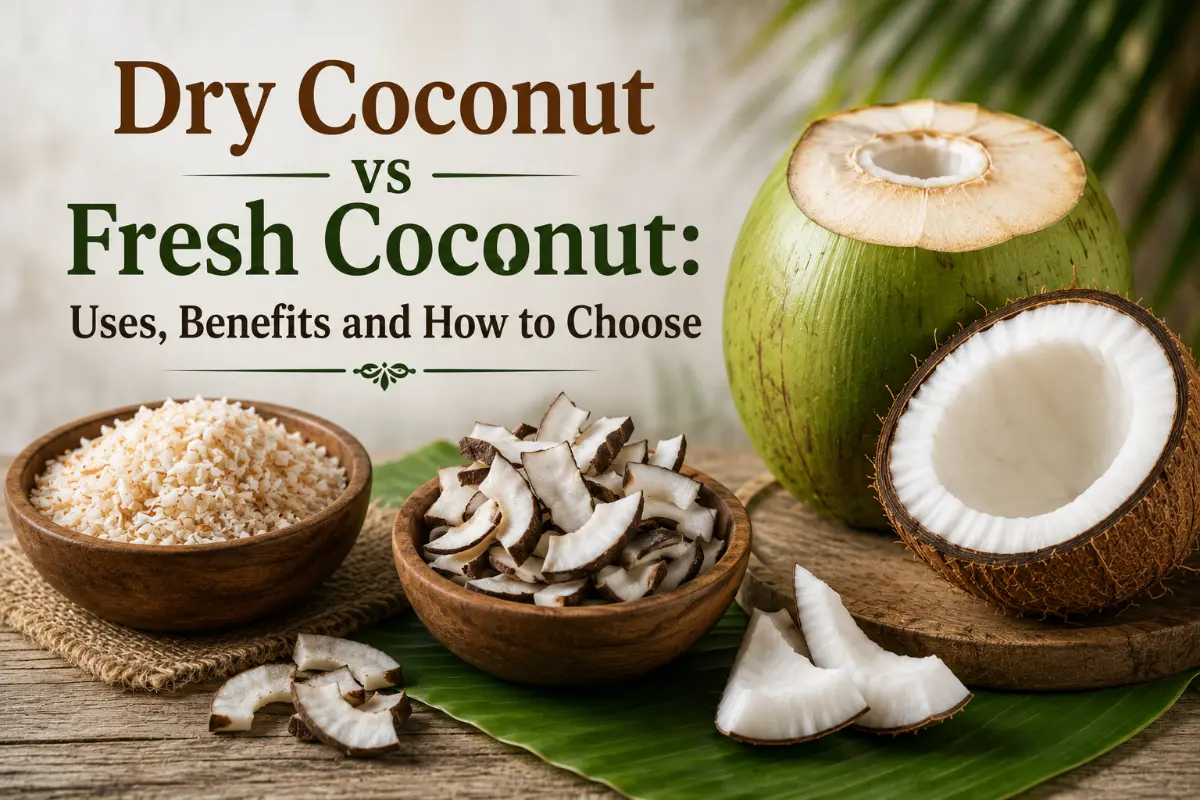
In most Indian kitchens, coconut shows up in two very different forms — the fresh, white-fleshed coconut cracked open for chutneys and curries, and the hard, brown dry coconut (copra) reached for during festivals, sweets, and pujas. They come from the same fruit, yet they behave completely differently in cooking, and knowing when to use which one can make a real difference to your dish.
What Makes Them Different
Fresh coconut is simply the mature but unprocessed fruit — cracked open, its white flesh grated or ground while still moist and mild. Dry coconut, on the other hand, is fresh coconut that has been deliberately dried out, either sun-dried or dehydrated, until most of the moisture is gone. That drying process concentrates the natural oils and sugars, giving dry coconut its dense, slightly sweet, chewy texture and much longer shelf life — fresh coconut spoils within days, while properly dried coconut can last months.
Where Fresh Coconut Shines
Fresh coconut is the backbone of South Indian cooking — ground into chutneys, blended into curries for body and mild sweetness, sprinkled over poriyal and thoran, or used to make coconut milk for stews and payasams. Its water content and mild flavor make it ideal for dishes where you want coconut in the background, adding creaminess without overwhelming other spices. Fresh coconut water itself is also a popular natural hydrating drink in the region.
Where Dry Coconut Shines
Dry coconut brings something fresh coconut can't: concentrated sweetness, a firmer bite, and a much longer shelf life, which is why it's the coconut of choice for festive sweets like laddoos and barfis, for grating over desserts, and for temple prasadam across South India. It's also commonly used whole in poojas and rituals, valued for its purity and durability. In cooking, dry coconut adds richness to gravies and is often roasted and ground into spice pastes, lending a deeper, toastier coconut flavor than fresh coconut can provide.
Nutrition: How They Compare
Because drying removes water and concentrates everything else, dry coconut is calorie-denser than fresh coconut, gram for gram, and contains more fiber and fat per serving. Fresh coconut has a higher water content and is naturally lower in calories per gram, making it easier to use generously in daily cooking without adding much richness. Both forms provide manganese, copper, and healthy plant fats — the difference is really about concentration and use-case, not one being "healthier" than the other.
How to Choose Good Quality Coconut
For fresh coconut, look for one that feels heavy for its size and sloshes with water when shaken — a sign it's still moist inside. For dry coconut, choose pieces that are uniformly brown, firm, and free of any mustiness or mold spots; good dry coconut should smell faintly sweet, never sour. Buying from a trusted, traceable source matters more than it seems, since improperly dried coconut can develop mold that isn't always visible from outside.
Our Approach at The Native Herd
We supply both fresh cooking coconuts and properly sun-dried coconut, sourced from the same farms around Kunigal that grow our other staples. No shortcuts in the drying process, no old stock — just coconut handled the way it should be, whichever form your kitchen needs it in.