Country Eggs vs Regular Eggs: What's the Real Difference?
Walk into most supermarkets and the egg aisle looks simple enough — rows of identical white or brown shells, priced by the dozen. But ask anyone who grew up in a village around Bengaluru, and they'll tell you: not all eggs are created equal. There's a reason "country eggs" (naati kodi eggs) command a premium and a loyal following, and it isn't nostalgia alone. The difference starts long before the egg reaches your kitchen — it starts with how the hen lives.
How Country Hens Actually Live
Commercial egg farms typically raise hybrid layer breeds in cages or dense barns, on a controlled feed formulated purely to maximize egg output. Country breeds, by contrast, are native varieties that free-range across farmyards and open land, foraging for insects, seeds, greens, and grain. This isn't a lifestyle choice for the farmer — it's simply how these breeds have always been raised in villages across Karnataka. The hens move, scratch, peck, and eat a varied natural diet instead of a single uniform feed mix.
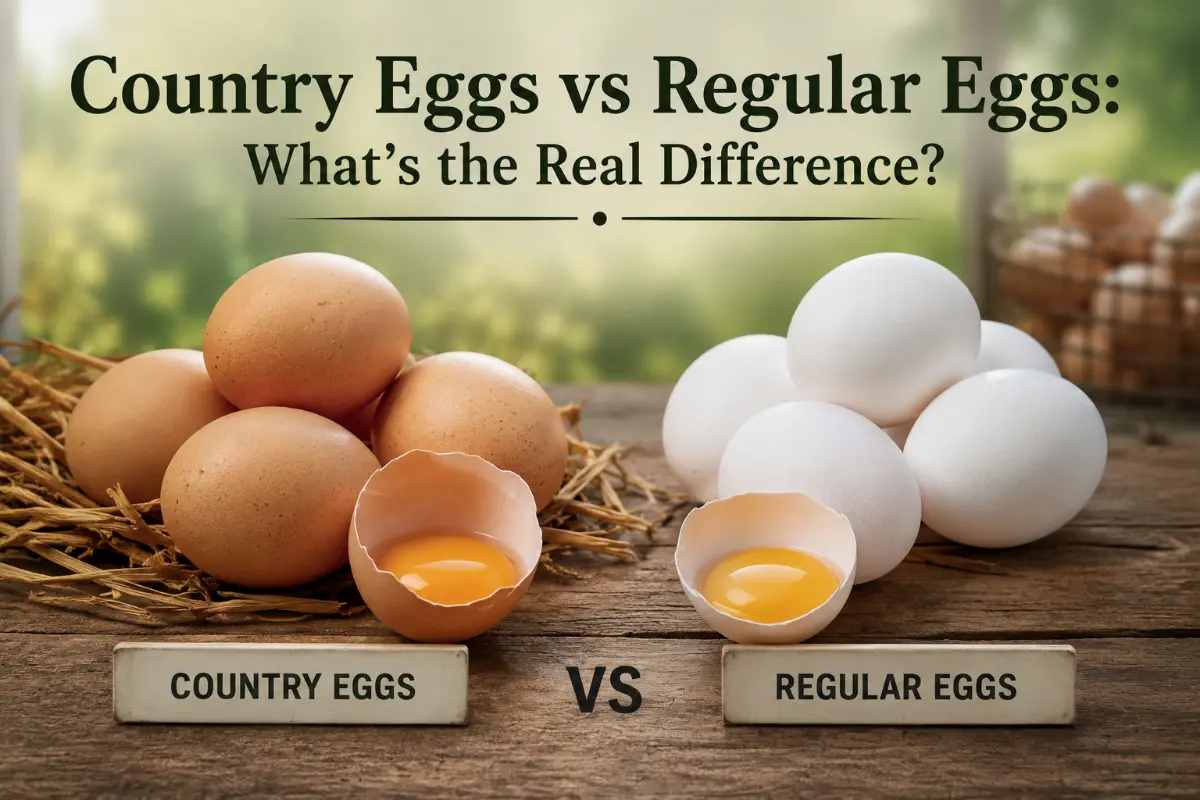
That difference in lifestyle shows up directly in the egg. A varied, foraged diet tends to produce yolks that are deeper, richer in color, and firmer in texture. Many people who switch to country eggs notice the difference the moment they crack one open — the yolk sits taller, the white is thicker, and the flavor is noticeably more pronounced than a standard supermarket egg.
Nutrition: What Actually Changes
Both commercial and country eggs are nutritious — eggs in general are one of nature's most complete foods, delivering high-quality protein along with choline, selenium, and B vitamins. But several small studies comparing free-range and pastured eggs to caged/commercial eggs have found free-ranging hens on varied diets tend to produce eggs with somewhat higher omega-3 fatty acids and vitamin A, largely because of the greens and insects in their diet. The exact numbers vary by farm and season, but the direction is consistent: a more natural diet tends to produce a more nutrient-dense egg.
A single country egg (roughly 50g) provides approximately 6 grams of high-quality protein, along with meaningful amounts of vitamin D, vitamin B12, iron, and choline — a nutrient many diets fall short on, important for brain and liver health.
Why the Price Is Different
Country hens lay far less frequently than hybrid commercial layers — often just a few eggs a week rather than daily. They take longer to mature, need more space, and produce a smaller, more seasonal supply. That lower yield is the primary reason country eggs cost more: it's simple economics of a slower, less intensive system, not markup for the sake of it. When you buy a pack of country eggs, you're really paying for space, time, and a natural diet — not a "gourmet" label.
How to Tell If Eggs Are Genuinely Country-Raised
Because "country egg" isn't always a regulated term, it helps to buy from a source you can trace back to an actual farm. Genuine country eggs tend to be smaller and less uniform in size and shape than commercial eggs — a sign they weren't bred purely for size consistency. The shells are often thicker, and yolks are visibly darker orange rather than pale yellow. If a supplier can tell you which village or farm the eggs come from, that traceability is usually a good sign.
Our Approach at The Native Herd
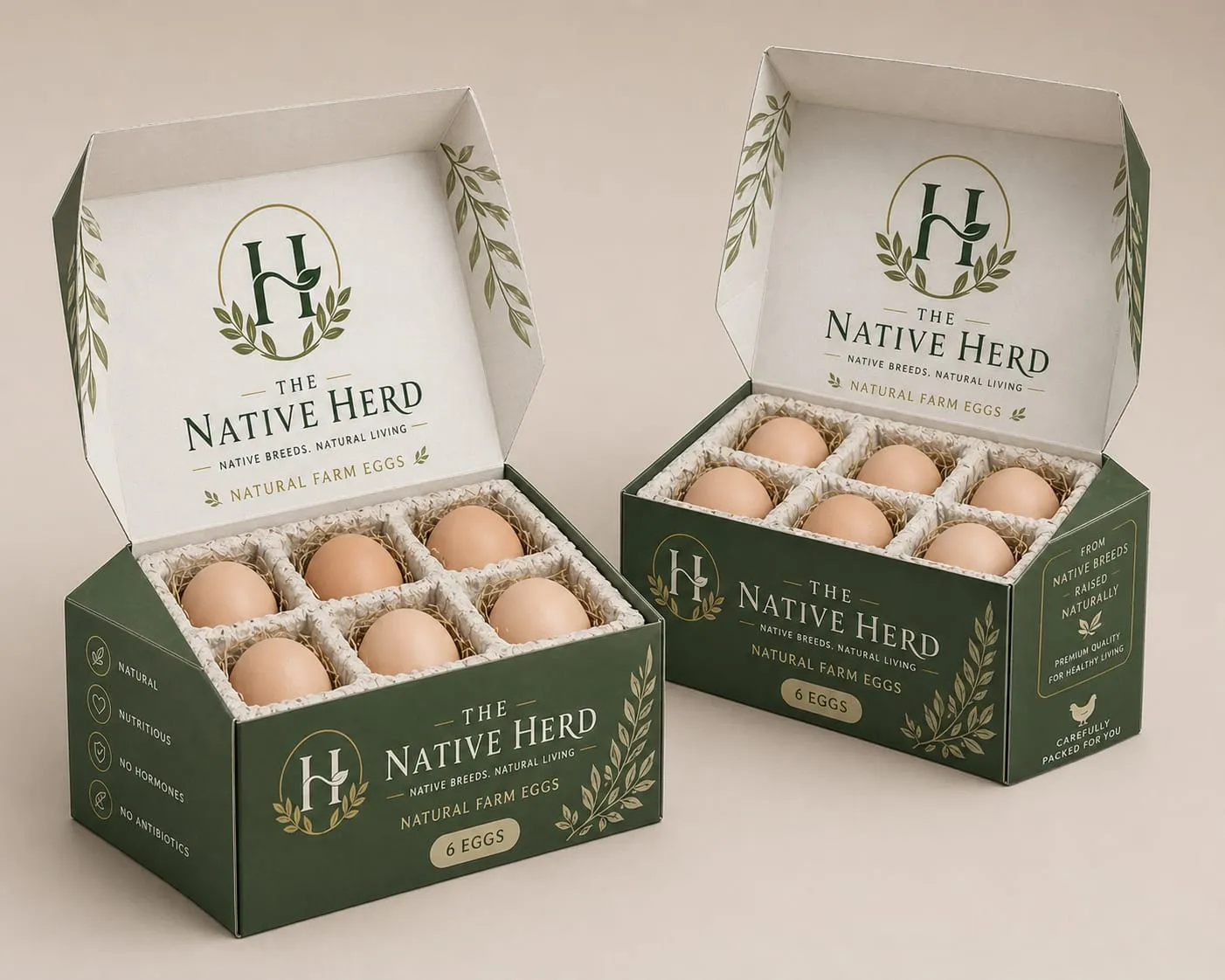
Our country eggs come from native breed hens raised on farms around Kunigal, roughly 70km from Bengaluru, where they forage freely across open farmland the way village hens always have. We don't force higher yields with artificial feed or lighting — the hens lay on their own schedule, which is exactly why the eggs taste the way they do. If you've been curious about the difference, it really is best understood by trying a pack for yourself.