Why Cold-Pressed Coconut Oil Is Ideal for South Indian Cooking
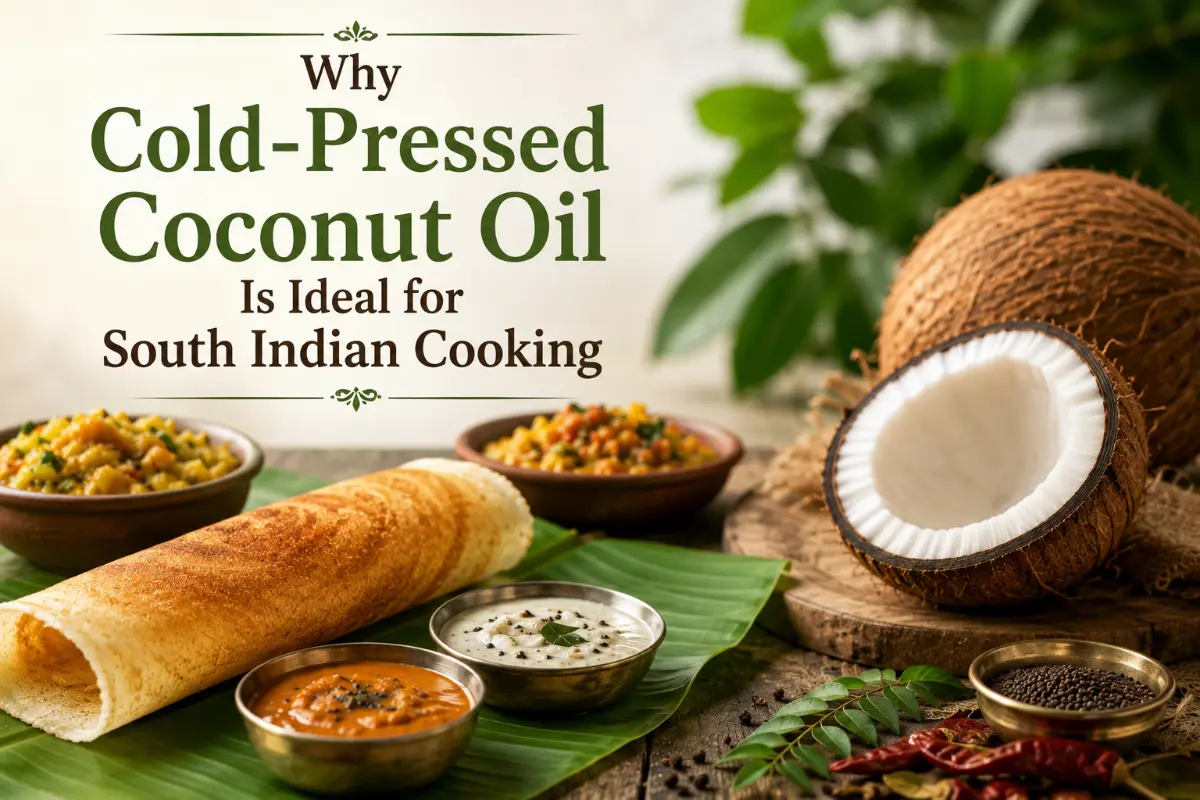
Open any traditional Karnataka, Kerala, or Tamil Nadu kitchen and you'll find one ingredient that never seems to change generation to generation: coconut oil. Long before "cooking oil" became a supermarket category with dozens of competing bottles, coastal and southern households were pressing their own oil from coconuts grown in their backyard. That tradition has survived not out of habit, but because coconut oil genuinely suits the region's climate, cuisine, and cooking methods better than most alternatives.
Built for the Heat
South India's climate is hot and humid for most of the year, and Ayurvedic food traditions have long treated coconut oil as a "cooling" ingredient — one that balances the body's internal heat, unlike some other fats considered heating. Whether or not you follow Ayurvedic frameworks, the practical experience of generations of cooks in hot climates points the same way: coconut oil feels lighter on the stomach in warm weather, and dishes cooked in it don't carry the heaviness that some refined oils can leave behind.
The Smoke Point Advantage
South Indian cooking relies heavily on tempering (tadka) — mustard seeds, curry leaves, and dried chillies dropped into hot oil for those first few crackling seconds that build the base flavor of a dish. This technique demands an oil that can take high heat without breaking down or turning bitter. Coconut oil's smoke point sits comfortably in the range needed for tempering, deep frying, and everyday sautéing, which is exactly why it's remained the go-to oil for dosa griddles, tadka pans, and deep-fried snacks across the region.
Cold-Pressed vs Refined: Why It Matters
Not all coconut oil is the same. Refined coconut oil is typically extracted from dried copra using heat and chemical processing, which strips out much of the natural aroma, flavor, and some of the antioxidant compounds along with it. Cold-pressed (or wood-pressed) oil is extracted mechanically at low temperatures, without solvents — a slower, lower-yield process, but one that preserves the natural coconut aroma and nutrients far better. If you've ever wondered why homemade or traditionally-pressed coconut oil smells and tastes noticeably richer than a plain refined bottle, this is why.
Cold-pressing also retains more of the natural antioxidants and polyphenols present in the coconut, compounds that are otherwise reduced by high-heat refining. For a cuisine where coconut oil isn't just a cooking medium but often a finishing touch — drizzled over chutneys, poured over rice, mixed into podi — that aroma and flavor retention genuinely changes the dish.
Where It Fits in Your Kitchen
Cold-pressed coconut oil works well for tempering, sautéing vegetables, shallow frying, and any dish where you want the coconut flavor to come through — think sambar, thoran, fish curry, or a simple dosa. For very high smoke-point deep frying of large batches, some cooks still prefer a neutral oil, but for the everyday cooking that fills a South Indian kitchen, coconut oil more than holds its own.
Our Approach at The Native Herd
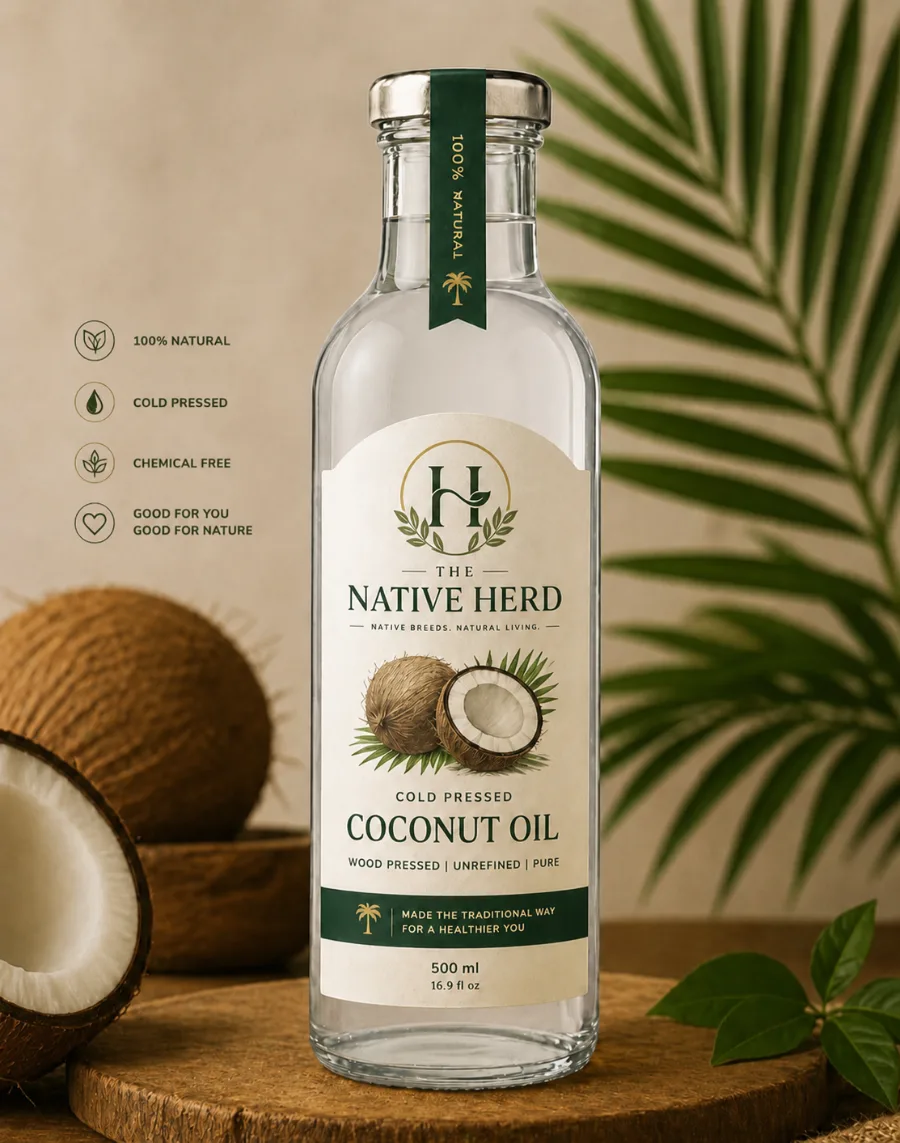
Our coconut oil is cold-pressed from 100% dry coconut, at low temperature, with nothing added and nothing refined out. No chemical solvents, no deodorizing, no bleaching — just coconut, pressed the way it always has been in this part of the country. It's a small return to a simpler kitchen staple, one that's suited exactly to the weather we cook in.